
Karolium vs Miget
Side-by-side comparison to help you choose the right product.

Build enterprise apps ten times faster with zero code for rapid digital transformation.
Last updated: February 28, 2026

Miget
Deploy unlimited services on one flat-rate plan.
Visual Comparison
Karolium
Miget
Overview
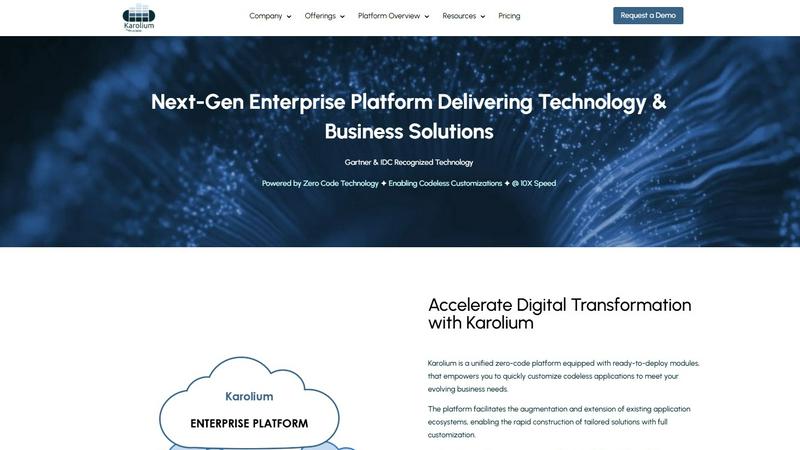
About Karolium
Karolium is the next-generation enterprise platform that supercharges your digital transformation at 10X speed. It is a unified zero-code environment designed for businesses seeking agility, efficiency, and intelligence without the traditional bottlenecks and escalating costs of software development. This platform empowers organizations to rapidly build, customize, and deploy tailored applications and seamlessly extend their existing software ecosystem—all without writing a single line of code. Built for enterprises frustrated by rigid off-the-shelf software and slow IT projects, Karolium combines iPaaS, aPaaS, oPaaS, and AIPaaS capabilities into one powerful suite. Its core value proposition delivers lightning-fast codeless customization, seamless augmentation of current systems, and built-in enterprise intelligence for predictive and prescriptive outcomes. With ready-to-deploy value chain modules and an active SaaS subscription, Karolium ensures continuous innovation, supports unlimited users, and offers boundless customization, enabling businesses to proactively adapt to market volatility and leverage AI immediately.
About Miget
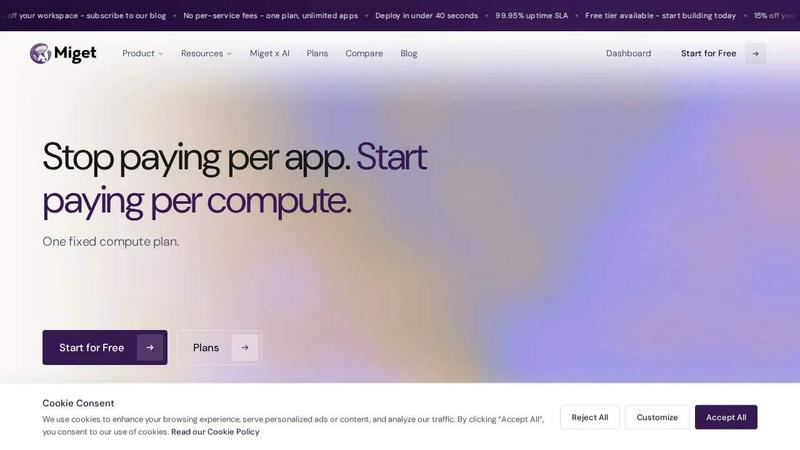
Miget – Stop paying per app. Start paying per compute.
Traditional PaaS platforms charge you for every app, database, and worker separately. Miget flips that model: pick a fixed compute plan, then deploy as many services as you want inside it.
- Unlimited apps, databases, and background workers per plan
- No per-service billing surprises
- Built on Kubernetes with full isolation between tenants
- Deploy from Git, GitHub, Registry with zero-config builds
- Managed PostgreSQL, Redis, and more
- Custom domains with automatic TLS
Whether you're running a single side project or a full production stack, you only pay for the compute you reserve—not the number of things you run on it.