

Alternatives to act101
act101 gives coding agents 163 grammars and 183 AST operations to instantly refactor and port code across languages.
Explore 20 alternatives to act101. Compare features, pricing, and find the best fit for your needs.

layahost
Jev-compatible typed decisions API: moderation, routing, intent and scoring for any text, hosted in the EU.

laya.tools
A free directory of 950+ projects built on Laya, the open-source decision model. Updated daily.

Forms Plugin
The #1 Native Form Builder Plugin for Framer - No Code, No Embeds, No External Platforms.

AkraLabs
Where modern software products get discovered, launched, and distributed. Explore verified AI tools, SaaS startups, and developer software.
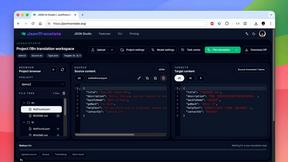
JsonTranslate
Translate JSON, Markdown, and TXT files while preserving keys, nested paths, and project structure.




Happy Horse AI
Create videos from text, images, or references with HappyHorse 1.1, flexible 720P/1080P output, optional audio, and API workflows.

Video2URL
Turn videos, images, and files into secure direct links for sharing, embedding, and automated workflows.


ContextBolt
Tools that give your AI real context. Live SEO data and your saved bookmarks, plugged straight into Claude, Cursor and Codex.

Free Gemini Omni
Create, remix, and edit cinematic AI videos online with text, image, audio, and video prompts.


Firma.dev
Pay-as-you-go e-signature API and no-code sending. €0.049 per envelope, no monthly minimums, legally valid in 55+ countries.

Ornold
Ornold MCP lets AI agents control Chromium and antidetect browsers: click, type, read screens, record workflows, replay profiles without scripts.

AIQualityHQ
AIQualityHQ checks your AI prompts for structure, safety, and privacy in under 10 milliseconds with zero API calls.

About act101 Alternatives
act101 is a high-speed dev tool engineered to turbocharge coding agents like Claude Code, Cursor, Codex, and OpenCode with 163 grammar tools and 183 AST refactor operations. It sits squarely in the Dev Tools category, purpose-built for developers who need to refactor and port code across an incredible 163 languages, from Python to Rust and Ruby to Elixir, all through a built-in MCP server. Users often seek alternatives due to specific pricing constraints, a need for broader platform compatibility, or a desire for different feature sets that might prioritize a particular language or workflow over act101’s massive, multi-language scope. When evaluating an alternative, focus on speed of execution, the depth of refactoring and porting operations, the number of supported grammars, and whether it integrates seamlessly with your existing agent ecosystem—look for tools that match act101’s lightning-quick AST analysis and agent-driven automation without sacrificing efficiency.
FAQs about act101 Alternatives
What is act101?
act101 is a lightning-fast dev tool that equips AI coding agents with 163 grammar tools, 183 AST refactor operations, 30 codebase analyzers, and 8 porting operations. It enables agents to refactor and port code across 163 programming languages, all exposed through a built-in MCP server for seamless integration with tools like Claude Code and Cursor.
Who is act101 for?
act101 is designed for developers and teams who use AI coding agents—such as Claude Code, Cursor, Codex, or OpenCode—to rapidly refactor and port codebases. It’s ideal for anyone working across multiple languages who needs high-speed, agent-driven AST transformations without manual effort, from solo devs to enterprise engineering teams.
Is act101 free?
Yes, act101 is free for personal use, making it an accessible, high-speed solution for individual developers. Commercial or team-based usage may involve different pricing tiers, but the core functionality of 163 grammars and 183 refactor operations is available at no cost for personal projects.
What are the main features of act101?
act101’s main features include 163 grammar tools for parsing, 183 AST refactor operations, 30 codebase analyzers, and 8 porting operations. It supports lightning-quick agent-driven refactoring and porting across 163 languages—like Python, C, Rust, Ruby, and Elixir—and integrates via a built-in MCP server with Claude Code, Cursor, Codex, and OpenCode for instant efficiency.