
qtrl.ai vs Skene
Side-by-side comparison to help you choose the right product.

qtrl.ai
Scale QA with AI agents while keeping full control and governance.
Last updated: March 4, 2026

Skene turns your codebase into an AI-powered growth engine you own and prompt.
Last updated: February 28, 2026
Visual Comparison
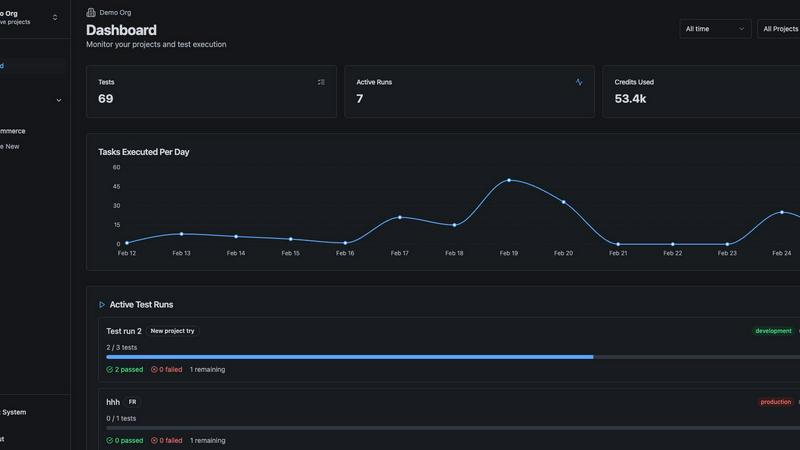
qtrl.ai
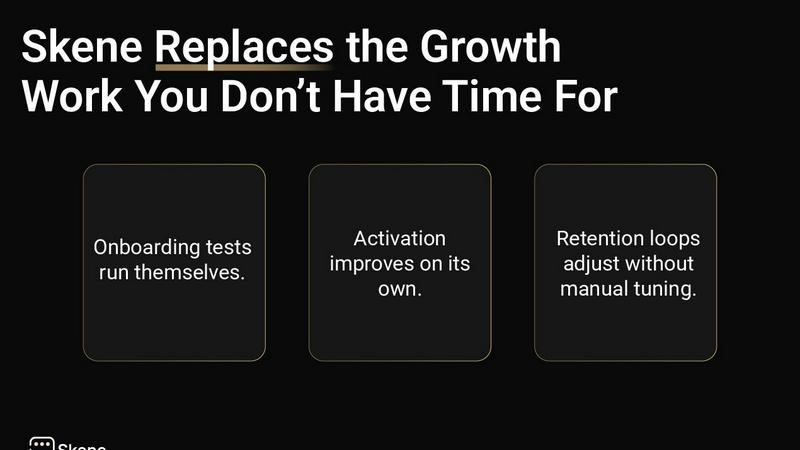
Skene
Feature Comparison
qtrl.ai
Autonomous QA Agents
Execute high-level instructions on-demand or continuously with AI agents that operate in real browsers, not simulations. They run at scale across multiple environments while strictly adhering to your predefined rules and governance models, delivering fast, reliable automation without unpredictable behavior.
Enterprise-Grade Test Management
Gain instant visibility and control with a centralized system for test cases, plans, and runs. This feature provides full traceability from requirements to coverage, robust audit trails, and supports both manual and automated workflows, making it built for compliance and serious governance needs.
Progressive Automation
Begin with human-written test instructions for complete control. As you're ready, leverage AI to generate and suggest new tests based on coverage gaps. Every step is fully reviewable and approvable, allowing you to increase automation velocity without ever sacrificing oversight or quality.
Adaptive Memory
Power smarter automation with a living knowledge base of your application. The platform learns continuously from exploration, test execution, and resolved issues. This context-aware intelligence makes test generation more effective and accurate with every single interaction, accelerating efficiency.
Skene
Codebase-Native Signal Detection
Skene analyzes your source code directly to detect growth signals, onboarding friction points, and activation opportunities. It scans your repository structure, understands your framework, and identifies key user flows without requiring manual instrumentation or code changes. This provides a foundational context layer for your AI to act upon, ensuring all growth logic is derived from the actual product.
Prompt-Driven Growth Implementation
Design and deploy growth loops through simple prompts. Instead of manually configuring tours or building complex event tracking, you instruct Skene via natural language. The system then generates the necessary code, tests, and deploys optimized user flows, turning strategic intent into shipped infrastructure in seconds, all within your existing development environment.
Self-Learning, Automated Optimization
Skene creates a continuous improvement loop that learns from every code push. As you ship product updates, the AI automatically analyzes the changes, updates its understanding of user journeys, and refines the growth mechanisms accordingly. This eliminates the maintenance burden of traditional tools that break with each deploy, ensuring your PLG infrastructure is always in sync.
Integrated Development Workflow
Growth infrastructure lives directly in your IDE and terminal, not in a siloed SaaS dashboard. Use commands like uvx skene-growth analyze to audit your codebase and generate a growth manifest. This deep integration means you version, test, and prompt your growth code just like the rest of your product, maintaining full ownership and performance.
Use Cases
qtrl.ai
Scaling Beyond Manual Testing
Ideal for QA teams overwhelmed by repetitive manual checks. qtrl.ai enables a fast transition by letting you start with documenting manual cases, then progressively automating them with AI. Scale your coverage and execution speed dramatically without needing a team of automation engineers.
Modernizing Legacy QA Workflows
Replace slow, siloed, and script-heavy legacy processes with a unified, intelligent platform. qtrl.ai integrates with existing tools and CI/CD pipelines, bringing structured management and AI-powered execution into a single workflow for continuous, fast feedback and streamlined operations.
Governing Enterprise AI Testing
For large organizations requiring strict compliance, qtrl.ai delivers enterprise-ready AI with permissioned autonomy levels and full agent visibility. It ensures no black-box decisions, provides complete audit trails, and keeps encrypted secrets secure, making intelligent automation safe and trustworthy.
Accelerating Product-Led Engineering
Empower product and engineering teams to ship faster with confidence. qtrl.ai's rapid test creation from plain English and autonomous execution closes the feedback loop instantly. This embeds quality into every development cycle, enabling faster releases without bottlenecking on QA.
Skene
Accelerating User Onboarding
Automatically generate and optimize onboarding flows that guide new users to their "aha moment." Skene identifies critical first-time user paths in your code and creates tailored, in-product guidance that updates itself with each feature release, drastically reducing time-to-value without manual tour creation.
Driving Feature Adoption & Activation
Continuously surface and promote key features to the right users at the right time. By understanding your codebase, Skene detects underutilized functionalities and creates automated, contextual prompts within the product to drive deeper engagement and increase overall activation rates.
Automating Customer Lifecycle Management
Replace manual email sequences and dashboard alerts with code-native lifecycle automation. Skene triggers personalized in-app messages, nudges, and success milestones based on real-time user behavior derived from your application logic, strengthening retention and reducing churn autonomously.
Enabling AI Agent-Driven Growth
Provide your AI development agents with a rich, code-aware context layer for growth. Agents can use Skene's analysis and manifest to understand user friction and automatically implement improvements, allowing you to offload growth optimization tasks and ship intelligent loops faster.
Overview
About qtrl.ai
qtrl.ai is the modern QA platform engineered to accelerate software quality assurance without the chaos. It's built for teams tired of choosing between slow, manual processes and brittle, expensive automation. qtrl delivers speed and control by fusing enterprise-grade test management with powerful, trustworthy AI automation. This creates a centralized command hub where teams can instantly organize test cases, plan runs, trace requirements, and track real-time quality metrics. The platform's true power is its progressive AI layer. Instead of a risky "black-box" overhaul, qtrl introduces intelligent automation gradually. Start with simple manual test management, then deploy autonomous AI agents that generate UI tests from plain English, maintain them through application changes, and execute at scale across browsers and environments. Designed for product-led engineering teams, QA groups scaling beyond manual testing, companies modernizing legacy workflows, and enterprises needing strict compliance, qtrl.ai provides the trusted path to faster, more intelligent, and fully governed quality assurance.
About Skene
Skene is a fully automated, AI-powered PLG (Product-Led Growth) infrastructure that transforms how products scale. It's a self-learning growth engine designed for indie developers, early-stage startups, and product-led companies who want to accelerate user onboarding, activation, and retention without building a dedicated growth team. The core value proposition is radical efficiency: growth becomes code you own, not a third-party black box. Skene connects directly to your codebase and IDE, analyzing your source to understand user flows and friction points. It then automatically generates, tests, and deploys optimized versions of these flows, creating a continuous improvement loop. This means your product's growth mechanisms improve themselves with every code change, eliminating manual dashboard tweaking and brittle UI overlays. Setup is lightning-fast, taking less than 60 seconds with read-only Git access. Skene replaces an entire legacy stack of analytics, onboarding, and lifecycle tools with a single, prompt-driven system that integrates seamlessly into your development workflow, putting growth infrastructure directly in the hands of builders. Stop fighting external stacks and start shipping growth loops where you already build.
Frequently Asked Questions
qtrl.ai FAQ
How does qtrl.ai ensure control over AI-generated tests?
Control is fundamental. All AI-generated tests and suggestions are fully reviewable and require explicit approval before execution. You set the autonomy levels and rules. The platform operates with complete transparency, providing full visibility into every agent action, ensuring no hidden automation.
Can qtrl.ai integrate with our existing development tools?
Absolutely. Built for real workflows, qtrl.ai offers seamless integration with popular requirements management systems and CI/CD pipelines. It fits into your existing toolchain to create continuous quality feedback loops, avoiding disruption and accelerating your current processes.
What makes qtrl.ai different from other "autonomous" AI testing tools?
qtrl.ai rejects the risky, all-or-nothing approach. It earns trust through a progressive model where you start simple and increase automation at your pace. It combines this with enterprise-grade test management and governance features that most AI-first tools lack, offering a balanced path to speed.
Is my application data secure with the AI agents?
Yes. Enterprise-ready security is a core principle. Your application data and test logic are protected. Crucially, environment variables and encrypted secrets are never exposed to the AI agents, ensuring sensitive information remains secure while still enabling powerful automated execution.
Skene FAQ
What is PLG software?
PLG (Product-Led Growth) software helps users discover value in your product without manual intervention from sales or customer success teams. It automates the user journey, guiding users to activation, driving feature adoption, and strengthening retention through the product itself, making the product its own primary growth vehicle.
How is Skene different from traditional customer experience software?
Traditional tools require manual tour creation, constant maintenance, and rely on brittle UI overlays that break with every deploy. Skene is fundamentally different: it reads your codebase and automatically generates onboarding, analytics, and lifecycle automation. When you push code, everything updates itself, eliminating the maintenance nightmare.
How long does it take to set up?
Setup is lightning-fast, taking less than 60 seconds. You simply connect your GitHub or GitLab repository with read-only access. Skene automatically analyzes your codebase to generate PLG flows and a growth manifest. No initial code changes, API modifications, or snippet pasting is required.
Is my code secure?
Absolutely. Security is paramount. Skene only requires read-only access to your repository. All analysis happens in a secure, isolated environment. Your source code remains yours; Skene provides the intelligence layer without ever taking ownership or storing your core IP.
Alternatives
qtrl.ai Alternatives
qtrl.ai is a modern QA automation platform in the Dev Tools category. It helps engineering teams scale testing with AI agents while maintaining full governance and control. It uniquely blends structured test management with progressive AI automation for a trusted path to faster releases. Users often explore alternatives for various reasons. Common drivers include budget constraints, specific feature needs like integration capabilities, or platform requirements such as on-premise deployment. The search for the right tool is highly individual to a team's workflow and maturity. When evaluating options, focus on core needs. Key considerations are the balance of AI power versus transparency, the strength of foundational test management, and compliance needs for enterprise audits. The goal is to find a solution that accelerates testing without introducing risk or complexity.
Skene Alternatives
Skene is an AI-powered PLG infrastructure that automates user growth by integrating directly with your codebase. It belongs to the productivity and management category, specifically for product-led growth automation. Users often look for alternatives due to factors like budget constraints, specific feature needs, or platform compatibility requirements. When evaluating alternatives, focus on core capabilities. Key considerations include the depth of codebase integration, the level of automation for testing and deployment, and the overall philosophy—whether it's a transparent system you control or a closed, third-party service. The goal is to find a solution that matches your technical stack and growth philosophy. The ideal tool should eliminate manual work, provide actionable insights derived from your product, and fit seamlessly into your existing developer workflow without creating friction or technical debt.