
dmaya vs Postproxy
Side-by-side comparison to help you choose the right product.

dmaya
dMaya is the AI design platform for agencies to generate, iterate, and export client-ready UI at lightning speed.
Last updated: April 13, 2026

Postproxy
Postproxy simplifies social media publishing by unifying multiple platforms through a single, efficient API.
Last updated: February 27, 2026
Visual Comparison
dmaya

Postproxy
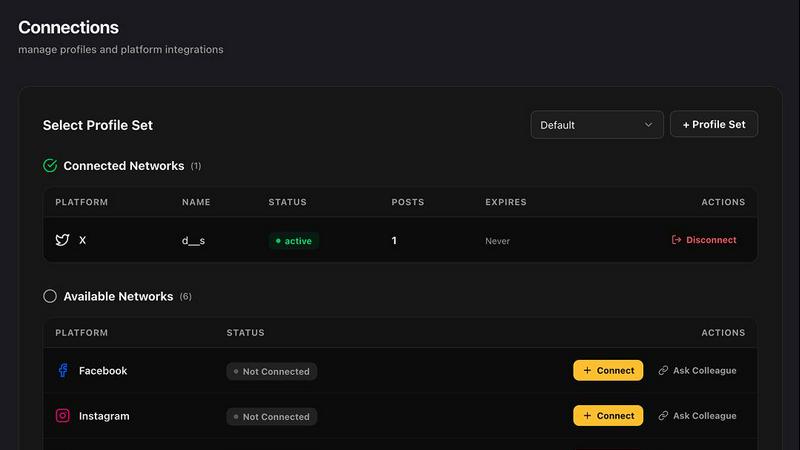
Feature Comparison
dmaya
Conversational AI Design Generation
Describe your vision in plain language and watch dmaya generate complete, professional UI designs in seconds. Input a brief for a SaaS dashboard or a mobile app flow, and the AI agent delivers fully realized screens with coherent layouts, component systems, and responsive variants. This feature eliminates the blank canvas, turning abstract ideas into tangible, editable designs instantly, so you can start refining immediately instead of starting from scratch.
Real-Time Iterative Refinement
Iterate on your designs through a natural language chat interface. Simply ask the AI to change the color palette, swap a layout, adjust typography scales, or add new sections. Every change is applied instantly and precisely across your project. Design tokens work behind the scenes to maintain visual consistency automatically, ensuring that your iterations are fast and your design system remains intact without manual oversight.
Client Presentation & Feedback Portal
Share your work in seconds with a single, secure preview link. Clients and stakeholders can review the interactive designs directly in their browser, leave contextual feedback, and give approval—no account required. This streamlines the entire review cycle, collapsing what used to be a days-long email thread or meeting schedule into a rapid, collaborative process that happens in minutes, all within the dmaya platform.
Design-to-Code Export for AI Agents
When designs are approved, export them as clean, semantic HTML, CSS, and JavaScript code. This output is perfectly structured for handoff to modern AI coding assistants like Claude Code, Cursor, or any other agent. They can then seamlessly transform your visual designs into production-ready code in your team's preferred framework, be it React, Next.js, Flutter, or React Native, bridging the gap between design and development.
Postproxy
Unified API
Postproxy offers a single API that handles the intricacies of multiple social media platforms, eliminating the need for individual integrations. This means you can publish to various networks seamlessly from a single endpoint, vastly simplifying your workflow.
Automated Content Adaptation
With Postproxy, content is automatically transformed to meet the specific requirements of each platform. This feature ensures that your posts maintain their integrity and effectiveness, regardless of where they are published, saving you time on manual adjustments.
Robust Error Handling
The API is designed to manage operational failures intelligently. It incorporates automatic retries, handles rate limits, and is aware of quotas, ensuring that your publishing process is smooth and reliable even in the face of unexpected issues.
Clear Publishing States
Postproxy provides explicit publish states, allowing users to know exactly what posts succeeded, what failed, and the reasons behind any failures. This transparency minimizes the need for manual checks and boosts confidence in your publishing pipeline.
Use Cases
dmaya
Agency Pitch & Concept Development
Agencies can accelerate their client acquisition and pitch process dramatically. Generate multiple high-fidelity design concepts during a discovery call to visually capture requirements. Present polished, interactive directions to stakeholders within hours, not weeks. The rapid iteration and easy client feedback loop enable faster alignment, helping agencies win more projects by demonstrating value and vision at lightning speed.
Product Team Ideation & Prototyping
Product teams can explore and validate UI directions before committing expensive engineering resources. Use dmaya to quickly prototype different user flows, landing pages, or app features. Collaborate across design, product, and engineering in a single workspace to align on vision early. This reduces costly rework later in the development cycle and ensures what gets built matches the intended user experience from the start.
Freelancer Project Delivery
Freelancers and independent designers can drastically increase their capacity and project throughput. Take on more client work without increasing hours by leveraging AI to handle initial design generation and tedious iteration. Deliver professional-grade presentations and gather client feedback efficiently, allowing for higher-value service and the ability to charge more by focusing on strategy and refinement over manual pixel-pushing.
Design System Exploration & Creation
Teams looking to establish or evolve a visual language can use dmaya as a rapid exploration tool. Generate multiple thematic directions (e.g., "a dashboard with a dark, professional vibe" vs. "a light, energetic feel") to compare. Use conversational iteration to fine-tune color, spacing, and typography scales, with design tokens ensuring consistency. Export the foundational styles as code to kickstart a unified component library.
Postproxy
Automated Social Media Marketing
Marketing teams can leverage Postproxy to automate their social media campaigns. By integrating content generation tools and scheduling features, they can publish tailored posts across platforms effortlessly, maximizing their outreach.
Streamlined Content Distribution
Content creators can use Postproxy to distribute their work across multiple social networks simultaneously. This ensures that their audience receives updates in real-time without the hassle of manual posting on each platform.
Efficient Brand Management
Companies managing multiple brands and accounts can utilize Postproxy to streamline their social media presence. By linking various accounts through a single API, they can maintain control over permissions and access while simplifying their operational processes.
Scalable Publishing Solutions
For businesses experiencing growth, Postproxy offers the scalability needed for increased publishing demands. Whether publishing ten posts or ten thousand, the API maintains consistent logic and performance, allowing users to focus on their content strategy.
Overview
About dmaya
dmaya is the AI design platform purpose-built for professional workflows, delivering design at the speed of thought. It is the essential visual design step that most AI tools skip, enabling agencies, product teams, and freelancers to design before they code. The core value proposition is simple: generate, iterate, and approve production-ready UI designs in minutes, not weeks. You start by chatting with an AI agent, describing a SaaS dashboard, e-commerce flow, or mobile app to get polished, multi-screen designs in seconds. Then, you refine through conversation—asking to change colors, swap layouts, or adjust typography with instant, precise updates. Design tokens ensure visual consistency automatically. Once the design is locked, share a client-ready preview link for feedback and approval, a cycle that now takes minutes instead of days. Finally, export clean HTML, CSS, and JS code to hand off to coding agents like Cursor or Claude Code for building in React, Next.js, Flutter, or any framework. dmaya is built for teams that need to present concepts, align stakeholders, and secure sign-off with confidence before a single line of development code is written.
About Postproxy
Postproxy is a cutting-edge API solution designed to streamline social media publishing across multiple platforms, including Instagram, Facebook, YouTube, LinkedIn, and X. It simplifies the complexities of social media integration by providing a unified endpoint that automates OAuth processes, rate limits, and retries, while also adapting content and delivering analytics. This tool is particularly beneficial for developers and automators who leverage platforms like n8n, Zapier, and CI/CD pipelines. With Postproxy, publishing becomes a predictable infrastructure layer, allowing users to generate AI content, route it according to predefined rules, and publish at scale without the hassle of manual adjustments. The platform offers a free plan, enabling users to scale their publishing needs as they grow, making it an optimal choice for teams seeking reliability and efficiency in their social media strategies.
Frequently Asked Questions
dmaya FAQ
How does dmaya differ from other AI design tools?
Unlike most AI tools that bypass design to generate code directly, dmaya is built specifically for the professional design process. It focuses on the critical visual design and client approval phase that agencies and teams require. It provides a collaborative, iterative design environment with client presentation features, ensuring alignment before any code is written. It then exports developer-friendly code for AI agents to build upon.
What kind of designs can I create with dmaya?
dmaya is built for a wide range of professional UI and UX design projects. You can generate and refine complete user interfaces for web and mobile applications. Common projects include SaaS product dashboards, e-commerce website flows, mobile app screens, landing pages, admin panels, and more. Describe your need in text, and the AI will create appropriate, polished screen designs.
Do clients need an account to review my designs?
No, clients and stakeholders do not need any account to review your work. You simply generate a shareable preview link from within your dmaya project and send it to them. They can view the interactive designs in their web browser, leave comments, and provide approval entirely as a guest, making the feedback loop incredibly fast and frictionless.
What code frameworks can I export to?
dmaya exports your finalized designs as clean, standards-based HTML, CSS, and JavaScript. This agnostic output is intentionally structured to be easily consumed by AI coding assistants like Cursor, Claude Code, GitHub Copilot, and others. You can then instruct those agents to convert the code into any modern framework your team uses, such as React, Next.js, Vue, Svelte, Flutter, or React Native.
Postproxy FAQ
How does Postproxy simplify social media publishing?
Postproxy replaces the chaos of individual platform integrations with a single API that automates OAuth, content adaptation, and error handling. This makes publishing efficient and reliable.
Is there a free plan available for Postproxy?
Yes, Postproxy offers a free plan that allows users to get started without any upfront costs. This enables teams to explore the platform and scale their usage as needed.
What types of content can be published using Postproxy?
Postproxy supports a variety of content types, including text, images, and videos, and it automatically adapts them according to the specifications of each social media platform.
How does Postproxy handle operational failures?
The API is designed to manage failures gracefully, implementing automatic retries and handling rate limits. This ensures that issues are dealt with proactively, minimizing disruptions in your publishing workflow.
Alternatives
dmaya Alternatives
dmaya is a specialized AI vibe design platform that accelerates the UI design and client approval process for agencies, teams, and freelancers. It sits at the intersection of AI-powered design generation and collaborative workflow tools, enabling users to create, iterate, and get sign-off on visual designs before a single line of code is written. Users often explore alternatives for various reasons, including budget constraints, specific feature requirements like advanced prototyping or native app integrations, or a need for a platform tailored to solo designers versus large enterprise teams. The search for the right tool is driven by the unique demands of each project and team structure. When evaluating options, key considerations should include the quality and control of AI-generated designs, the efficiency of the client feedback and approval cycle, and the readiness of the exported output for your development stack. The goal is to find a solution that streamlines the entire pre-development phase without compromising on creative intent or team alignment.
Postproxy Alternatives
Postproxy is a powerful tool that allows users to publish content seamlessly across multiple social networks using a single API. It falls under the category of design tools, specifically tailored for developers and automators who seek efficiency in social media management. Users often search for alternatives due to various reasons, including pricing structures, specific feature sets, or unique platform requirements that Postproxy may not fully meet. When choosing an alternative to Postproxy, it's essential to consider factors such as ease of integration, scalability, and the range of supported platforms. Look for solutions that provide automation capabilities, robust analytics, and a user-friendly interface to ensure a smooth transition and maintain effective social media publishing workflows.