
LLMWise vs SVG to 3D
Side-by-side comparison to help you choose the right product.

LLMWise
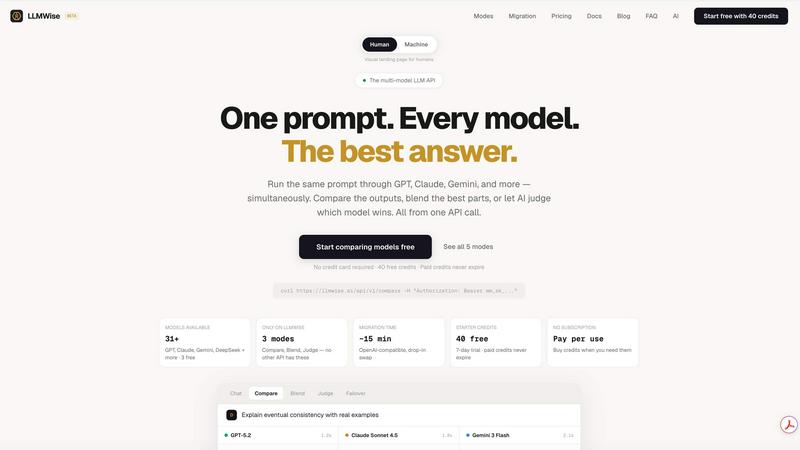
LLMWise offers a single API to access multiple AI models, optimizing performance with pay-per-use pricing and no.
Last updated: February 27, 2026
SVG to 3D
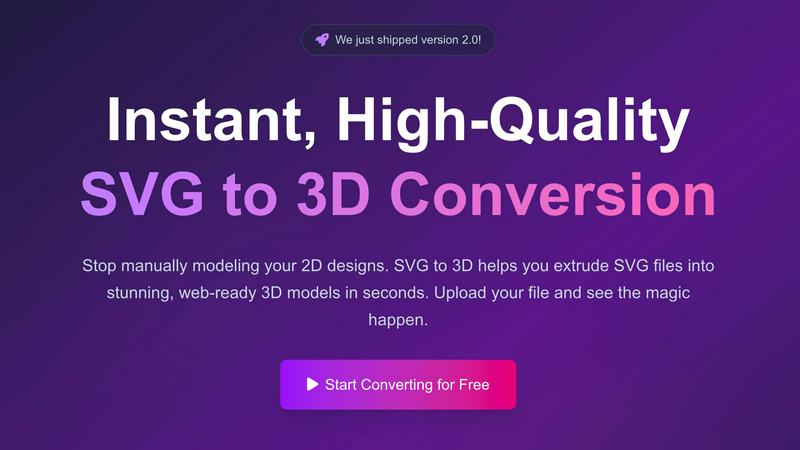
Instantly transform your SVG files into stunning, web-ready 3D models with fast, high-quality conversion tools.
Last updated: February 27, 2026
Visual Comparison
LLMWise
SVG to 3D
Feature Comparison
LLMWise
Smart Routing
LLMWise employs a sophisticated smart routing feature that ensures each prompt is sent to the most appropriate model. For example, coding tasks are routed to GPT, while creative writing prompts are directed to Claude, and translation requests are handled by Gemini. This targeted approach maximizes efficiency and output quality.
Compare & Blend
The compare and blend functionalities allow users to run prompts across different models side-by-side. This not only facilitates direct comparison of outputs but also enables users to merge the best parts of each response into a single, cohesive answer. This results in higher quality and more accurate outputs.
Resilient Infrastructure
LLMWise includes a circuit-breaker failover mechanism that automatically reroutes requests to backup models whenever a primary provider experiences downtime. This ensures that applications utilizing LLMWise maintain uninterrupted performance, safeguarding against service interruptions.
Test & Optimize
With LLMWise, developers can access benchmarking suites, batch testing, and optimization policies to enhance speed, cost, and reliability. Automated regression checks further ensure that any updates do not negatively impact existing functionalities, making it easier to maintain high-quality outputs.
SVG to 3D
One-Click GLB Export
With SVG to 3D, you can export your designs as lightweight GLB files with a single click. These files are perfectly optimized for web use, allowing developers to seamlessly integrate 3D models into frameworks like Three.js and React Three Fiber, enhancing the user experience of their websites.
3D Printing Ready STL Exports
The tool supports direct STL exports, making it incredibly easy to prepare your designs for 3D printing. You can take your logos, custom parts, or artwork straight from SVG to a 3D-printable format without needing any additional software, ensuring a smooth workflow from design to production.
Real-Time 3D Model Adjustments
SVG to 3D goes beyond basic extrusion by offering users the ability to fine-tune various aspects of their 3D models, including thickness, bevels, and PBR materials. The real-time preview feature allows you to visualize changes instantly, ensuring you achieve the perfect look for your project.
Privacy and Security Focus
Your design files are processed locally in your browser, ensuring your creations remain private and secure. Unlike many online tools that require file uploads to external servers, SVG to 3D prioritizes your privacy, making the conversion process both safe and efficient.
Use Cases
LLMWise
Software Development
Developers can utilize LLMWise for coding assistance by routing programming queries to the most effective model. This reduces debugging time and enhances coding efficiency, allowing teams to focus on more critical tasks.
Content Creation
Content creators can leverage LLMWise for generating diverse written material. By comparing outputs from various models, they can refine their creative processes, blending responses to produce compelling articles, ads, or social media posts.
Multilingual Communication
Businesses requiring translation services can utilize LLMWise to efficiently manage multilingual content. By routing translation tasks to the most suitable models, they can ensure accurate and contextually relevant translations, enhancing global communication.
Quality Assurance
Quality assurance teams can implement LLMWise to generate test cases and validate outputs. With its compare mode, teams can easily identify discrepancies between model responses, ensuring that the final product meets stringent quality standards.
SVG to 3D
Create Interactive 3D Web Elements
Web developers can transform their SVG icons into stunning 3D models that enhance their websites. By utilizing the optimized GLB export, developers can create engaging and interactive user experiences that capture the attention of visitors.
Rapid Prototyping for 3D Printing
Designers can quickly turn their 2D designs into physical objects by exporting them as STL files ready for 3D printing. This capability is invaluable for creating prototypes, custom parts, or art pieces without the need for complex CAD software.
Elevate UI/UX Designs with Depth
UI/UX designers can add depth and realism to their mockups by converting SVG elements into 3D models. This feature allows for impressive presentations that stand out to clients and stakeholders, showcasing design concepts with a more tangible feel.
Streamlined Workflow for Developers
SVG to 3D integrates seamlessly into the workflows of developers using tools like Figma. This means they can quickly convert their designs into 3D models without leaving their design environment, saving time and improving productivity.
Overview
About LLMWise
LLMWise is an innovative AI integration solution designed to streamline access to a multitude of language models through a single API. By consolidating major LLMs such as OpenAI, Anthropic, Google, Meta, xAI, and DeepSeek, LLMWise allows developers to harness the power of the best AI models for various tasks without the hassle of managing multiple subscriptions. Its intelligent routing system automatically directs prompts to the most suitable model based on the nature of the task, ensuring optimal performance. Whether you need coding assistance, creative writing, or translation, LLMWise simplifies the process, saving time and resources. With features like side-by-side comparisons and blending capabilities, it enhances output quality while providing resilience through circuit-breaker failover mechanisms. Tailored for developers, LLMWise offers a pay-per-use model with no hidden costs, making it a cost-effective choice for anyone looking to leverage advanced AI capabilities.
About SVG to 3D
SVG to 3D is a revolutionary online tool designed to streamline the process of converting 2D SVG vector graphics into stunning, high-quality 3D models. This tool specifically addresses the frustrations of designers and developers who require quick and efficient conversions without the overhead of complex software like Blender or Cinema 4D. With SVG to 3D, users can transform their logos, icons, and other graphic designs into interactive 3D assets with just a few clicks. It is perfect for web developers, graphic designers, and 3D printing enthusiasts looking for a fast, reliable solution to enhance their projects. The primary value proposition lies in its ability to deliver high-quality 3D models optimized for web use, ensuring that users can elevate their digital and physical designs in minutes, not hours.
Frequently Asked Questions
LLMWise FAQ
How does LLMWise handle model selection?
LLMWise uses smart routing to automatically select the most appropriate language model for each prompt based on its specific needs. This ensures optimal results across various tasks.
Can I use my existing API keys with LLMWise?
Yes, LLMWise supports the Bring Your Own Key (BYOK) feature, allowing you to plug in your existing API keys from various providers. This flexibility can significantly reduce costs.
What if a model goes down while I am using it?
LLMWise includes a circuit-breaker failover mechanism that automatically reroutes requests to backup models when a primary model is unavailable, ensuring that your application continues to function smoothly.
Are there any subscription fees associated with LLMWise?
No, LLMWise operates on a pay-per-use model without any subscriptions. Users pay only for the credits they consume, with free credits available for testing and development purposes.
SVG to 3D FAQ
How does SVG to 3D work?
SVG to 3D works by allowing users to upload their SVG files directly into the browser. The tool then uses optimized algorithms to convert the 2D graphics into 3D models, which can be adjusted in real-time before exporting.
What file formats can I export my 3D models in?
You can export your completed 3D models in multiple formats, including GLB, GLTF, OBJ, and STL. This flexibility ensures compatibility with various 3D applications and printing software.
Is there a limit to the file size I can upload?
Yes, you can upload SVG files with a maximum size of 5 MB. This limit helps ensure fast processing times and optimal performance when converting your designs.
Do I need to register or pay to use SVG to 3D?
No, SVG to 3D is completely free to use and does not require any registration. You can start converting your SVG files to 3D models instantly, with no hidden fees or subscriptions.
Alternatives
LLMWise Alternatives
LLMWise is a powerful API designed for AI assistants, providing seamless access to multiple large language models (LLMs) such as GPT, Claude, and Gemini. It eliminates the hassle of managing various AI providers by intelligently routing prompts to the most suitable model based on the task at hand. Users often seek alternatives to LLMWise due to factors like pricing structures, specific feature requirements, or the need for integration with particular platforms. When choosing an alternative, it's essential to consider aspects like ease of use, flexibility, model selection, and overall performance to ensure it meets your specific needs.
SVG to 3D Alternatives
SVG to 3D is a powerful tool designed to transform 2D SVG vector graphics into stunning 3D models. This product falls under the category of AI Assistants, specifically tailored for designers, developers, and 3D printing enthusiasts looking to streamline their workflow. Users often seek alternatives due to various reasons such as pricing, specific feature requirements, or compatibility with their preferred platforms. When selecting an alternative, it's crucial to consider factors like ease of use, output quality, and integration capabilities with other software or development frameworks. Evaluating whether the tool aligns with your specific needs, such as support for web exports or 3D printing, will ensure you find the best fit for your projects.