
Avina vs Product Launchpad
Side-by-side comparison to help you choose the right product.

Avina
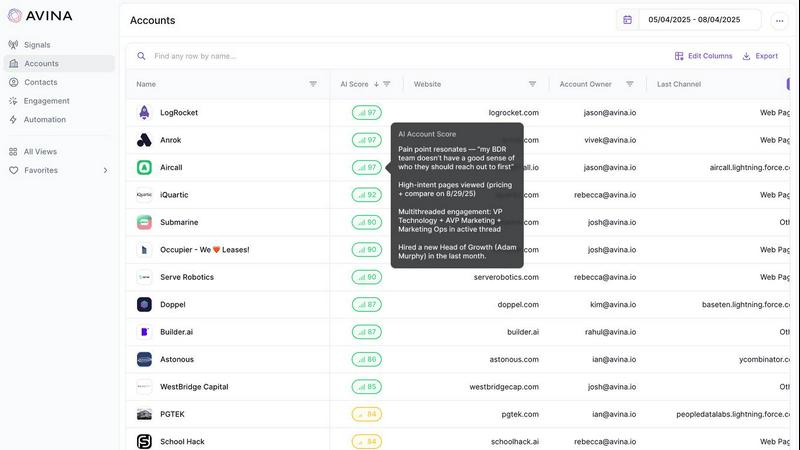
Avina uses AI to identify and automate outreach to high-intent B2B prospects, boosting your sales efficiency instantly.
Last updated: February 28, 2026

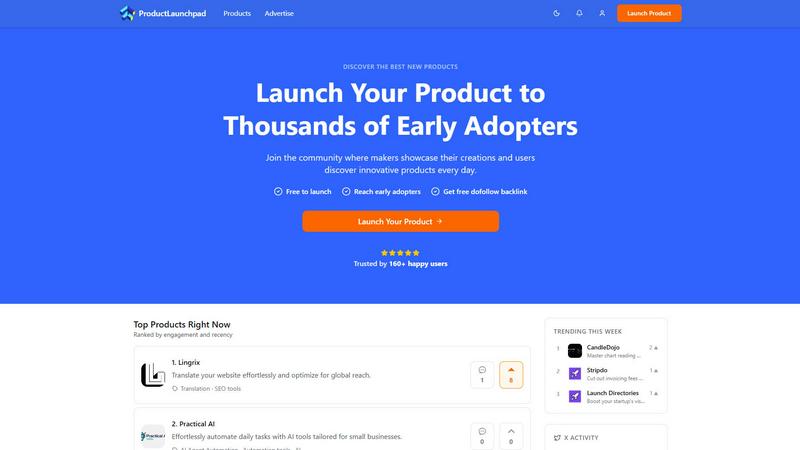
Launch your product to early adopters and keep getting visibility, traffic, and users over time.
Visual Comparison
Avina
Product Launchpad
Overview
About Avina
Avina is a revolutionary AI-powered platform tailored to meet the needs of modern revenue teams. It simplifies the sales process by delivering precise buying signals and effective account prioritization. In a world where the digital landscape is increasingly complex, Avina unifies data from various sources, including web intent, CRM activities, email and call interactions, ad engagement, job changes, and company news. This holistic approach allows sales teams to identify accounts that are genuinely in-market and ready to engage. By leveraging advanced large language models (LLMs), Avina interprets the context of interactions to intelligently score and prioritize accounts, simulating human judgment. The result is a real-time, ranked list of warm opportunities, enabling sales teams to act promptly. With seamless integrations into platforms like Salesforce, HubSpot, and LinkedIn, Avina ensures that no in-market buyer is left behind, streamlining the conversion of intent into actionable insights.
About Product Launchpad
ProductLaunchpad is a launch platform for founders, indie hackers, and marketing teams who want consistent growth, not a short spike. Most platforms give you attention for a day. After that, your product disappears. ProductLaunchpad is built differently.
Your product stays discoverable and continues to reach early adopters over time. You can launch in minutes with AI-assisted submission, get a free dofollow backlink, and improve your visibility in search engines and LLMs.
The focus is on long-term exposure and matching products with the right users. This helps you generate ongoing traffic, feedback, and signups instead of chasing one-time launch metrics.